

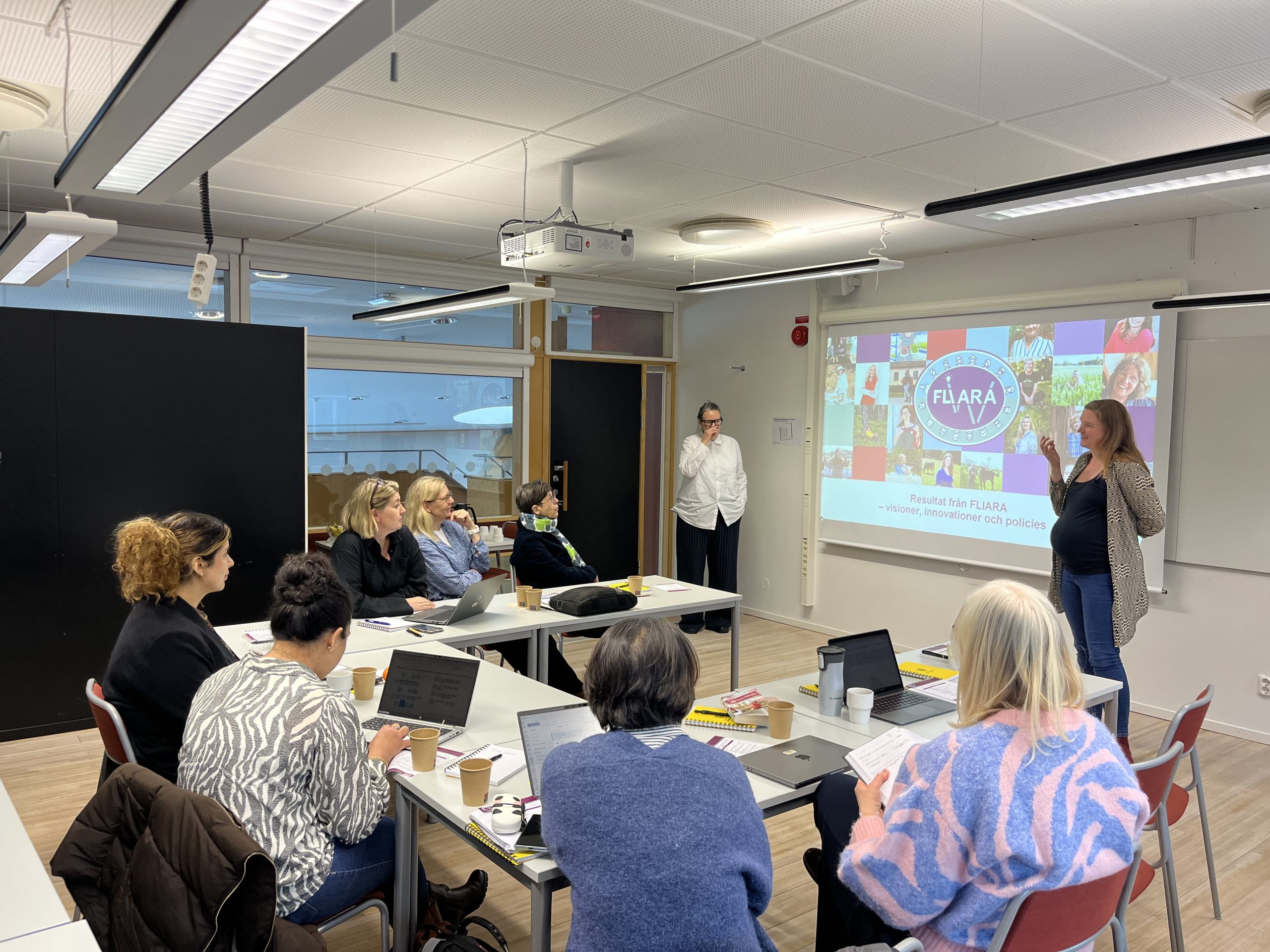
A key symposium at Linnaeus University (LNU) in Växjö, Sweden, on 26 November 2025, brought together Swedish academics to scrutinise the vital yet often unacknowledged contributions of women to agriculture and rural development, alongside the persistent systemic challenges they encounter. The event was part of the ongoing efforts of the FLIARA project to cultivate knowledge, networks, and policy insights across Europe.
The Power of ‘Living Labs’ and Participatory Methods
The day commenced with an address from Katarina Petersson of the Grass Ceiling project, a sister project to FLIARA. Ms Petersson emphasised the transformative potential of ‘living labs’—practical, women-only environments designed for testing ideas, collaboration, and networking. She illustrated how these exclusive spaces are critical for fostering empowerment, enhancing visibility, and providing a safe forum for open dialogue about difficulties and potential solutions.
Subsequent discussions centred on the need to incentivise meaningful participation in rural development research. Participants explored the careful balance required between ensuring high visibility for women’s work, maintaining ethical considerations, addressing inherent biases, and achieving genuine engagement in research-driven projects.

Unconventional Innovation Constrained by Policy
Researchers from LNU, Annie Roos and Anna Alexandersson, presented current FLIARA findings, offering analyses of sustainability issues in rural regions, women’s innovation pathways, and the policy frameworks governing rural entrepreneurship. The presentations underscored a significant constraint: women’s innovation work is frequently limited by entrenched gendered expectations. This is particularly evident when their entrepreneurial efforts do not align with conventional, technology-driven, or purely growth-orientated business models.
Symposium attendees strongly advocated for policy changes to recognise and value the social, cultural, and sustainability-focused forms of innovation that rural women frequently pioneer, which currently fall outside the criteria of traditional business administration views and prevailing policies.
Annie Roos, FLIARA partner for Sweden, reflected on the success of the day, stating, “It was a great opportunity to bring together leading scholars interested in the intersection between entrepreneurship, gender, and rural areas. The discussion was more rewarding than we ever could have imagined. This symposium gave us the opportunity to draw together the FLIARA and Grass Ceiling projects and add a national perspective.”
Historical Context and Contemporary Backlash
The agenda also included a keynote presentation from Professor Helene Ahl of Jönköping University, who offered an insightful examination of how Sweden’s policy history—specifically changes to parental leave and the welfare system—has historically moulded gender roles within the nation.
The conversation broadened to include the issue of contemporary gender backlash, evolving family norms, and the imperative to safeguard the achievements won through political activism and education.
A central message resonated throughout the day: supporting women-led innovation and achieving gender equality in rural regions requires not only dedicated resources and visibility but also a long-term commitment to structural and cultural change. The collective experiences shared highlighted the power of shared reflection to combat isolation and inertia, elevate innovative practices, drive policy reform, and inspire new collaborative models within rural communities.