

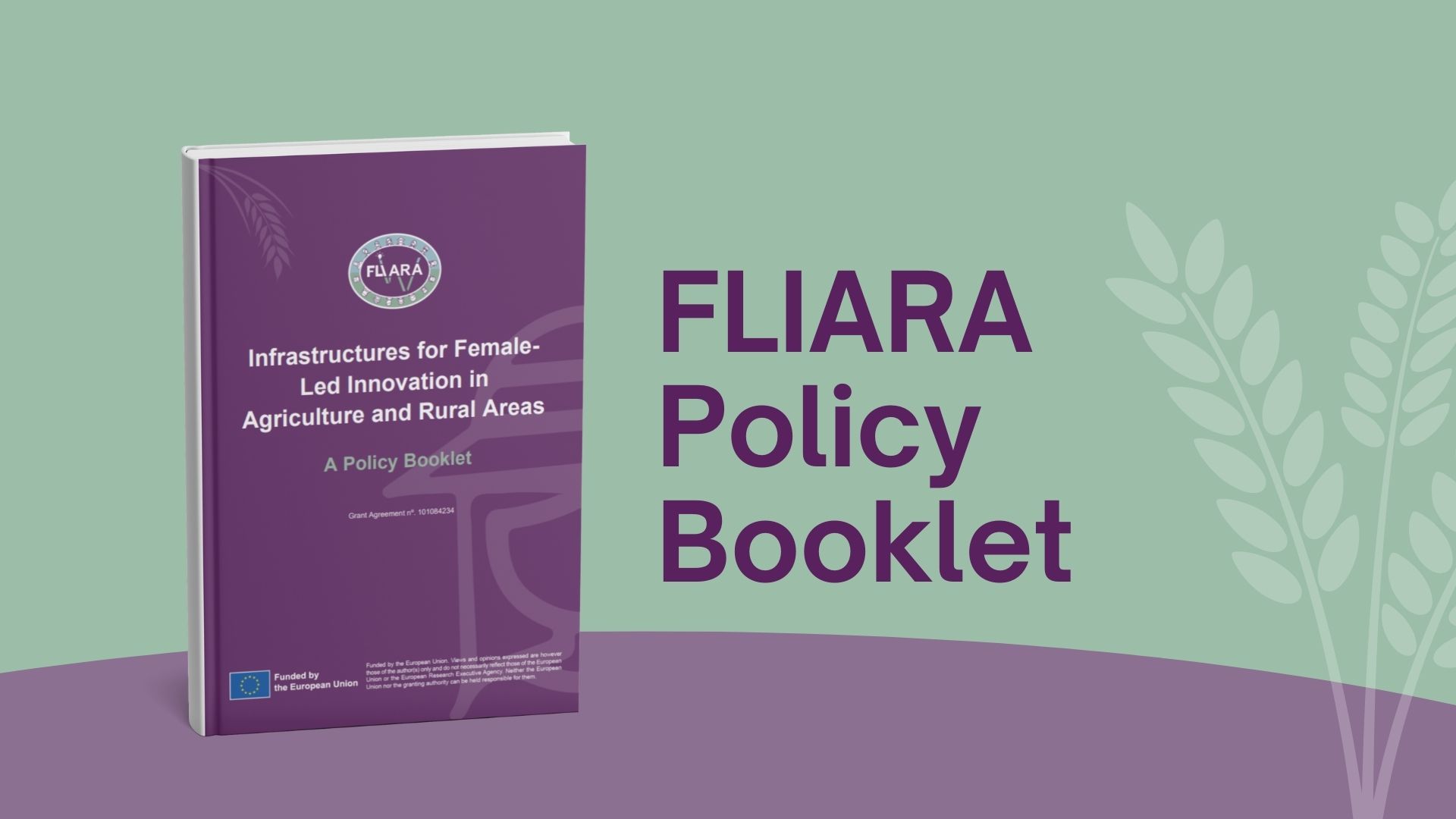
The success of the European rural economy hinges on its ability to harness all available talent. While research has consistently demonstrated the extensive, yet often under-supported, role of women in driving innovative practices across farming and rural enterprises, the persistent challenge lies in ensuring that high-level policy mechanisms genuinely reflect this reality.
This is the imperative addressed by the forthcoming Policy Booklet. This key deliverable is a comprehensive guidebook, designed not merely to observe existing policy gaps but to serve as a guide for actionable institutional change. It represents the culmination of extensive fieldwork, data analysis, and engagement with stakeholders across the continent, translating complex findings into clear, pragmatic recommendations for policymakers at the local, national, and European levels. The FLIARA Project is profoundly committed to fostering an environment where innovation is universally accessible and championed, regardless of gender.
Policy solutions grounded in networks and sustainability
The Policy Booklet achieves its purpose by identifying and providing solutions for the essential infrastructures required to sustain female-led innovation. This goes well beyond conventional physical infrastructure, reframing the necessary support as dynamic networks.
The document’s analysis is built around two core, interconnecting concepts:
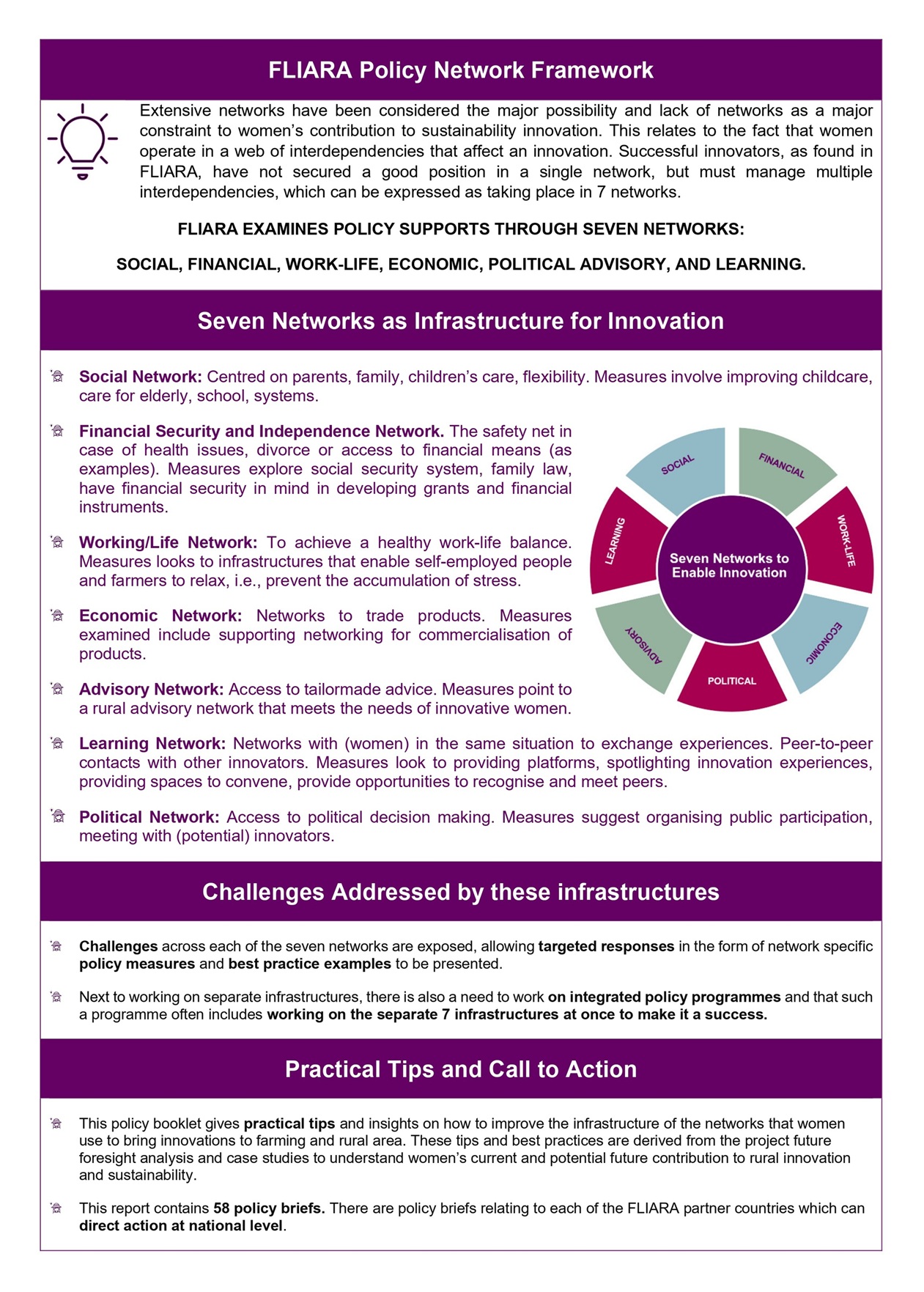
Seven Networks as Infrastructure for Innovation: FLIARA proposes that true supportive infrastructure encompasses seven critical networks which must be maintained and strengthened by policy. These networks address systemic needs and include the Social Network, the Safety Network (financial), the Working/Life Network, the Economic Network, the Advisory Network, the Learning Network, and the Political Network. The booklet dedicates detailed sections to each, providing tailored best practices and policy briefs aimed at strengthening these foundational support systems. For instance, by analysing the challenge of financial stability, the Policy Booklet proposes specific solutions for redesigning mechanisms to accommodate the diverse range of smaller, social, and cultural ventures led by women.
Supporting Four Dimensions of Sustainability: The recommendations are strategically aligned to ensure that policies support innovation that impacts all four dimensions of sustainability: environmental, economic, social, and cultural. This integrated approach ensures that policy not only boosts productivity but also contributes to the resilience of rural communities, their heritage, and their ecological balance.
Key areas for strategic reform
The Policy Booklet highlights that institutional reform must be comprehensive to be effective. The recommendations provide solutions to systemic issues, such as the need to ensure advisory services, research dissemination, and training programmes within the Agricultural Knowledge and Innovation System (AKIS) are gender-aware and accessible to all rural actors.
Furthermore, the document advocates for strengthening the commercialisation pathways for women-led enterprises. By detailing best practices for market access and promoting the visibility of these leaders through targeted communication and public procurement, the FLIARA Project aims to shift the cultural narrative and reinforce an inclusive entrepreneurial culture across Europe.
In essence, the Policy Booklet is not simply a report; it is a strategic document that outlines precise policy solutions required to leverage the full innovative capacity of rural Europe. By implementing these recommendations, policymakers can move towards a more resilient, equitable, and sustainable future for everyone.