Mind the Gap: Strengthening Policy and Legal Foundations for Women in Rural Innovation
To support women innovators by new proposals, understanding how policy and legal frameworks can hinder, support or unlock their potential in agriculture and rural communities is critical.
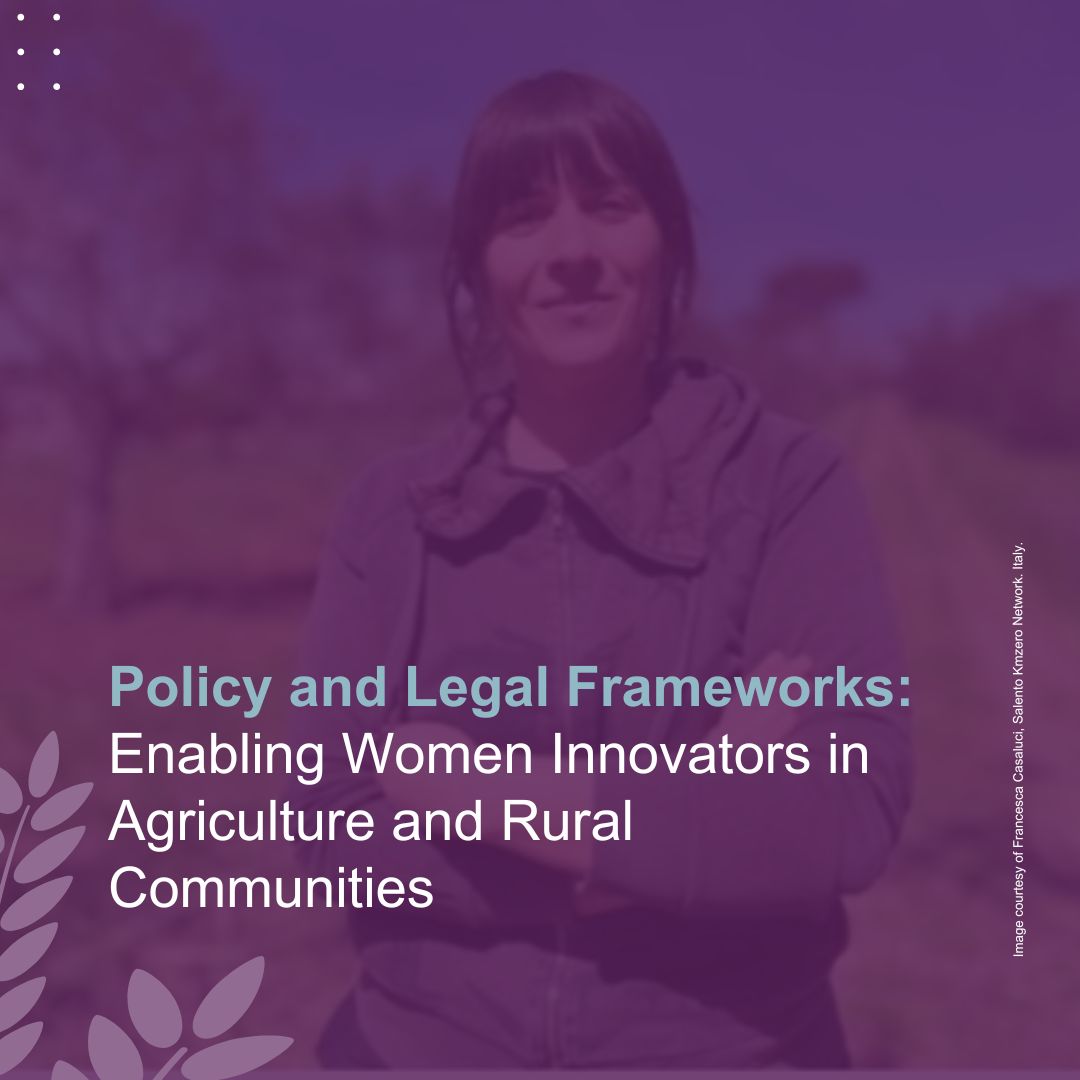
Why conduct a policy and legal framework assessment
Women-led innovation occurs as part of an innovation ecosystem where there is an innovation journey that follows a pathway with a number of stages and steps. At each stage, policy and legal frameworks have direct and indirect impacts on innovator capacity and decision making.
As the first step in policy development for the project, this assessment provided an insight on key policy issues and set up a foundational knowledge base for the other policy related reports of the FLIARA project.
What is in the report and who should use this report
- This report is designed as a resource for policymakers, researchers and practitioners seeking evidence-based insights into policy and legal frameworks in relation to women-led innovation from across the EU.
- In addition to a European level analysis, the report contains 10 individual national policy and legal framework assessments. The emphasis is on a scoping-type exercise that provides a descriptive yet detailed inventory-like review of existing policy and law in the areas examined. The report draws out lessons on what works and what needs improvement to support female innovators.
- Users can rely on it to identify policy gaps, explore models of good practice, and advocacy actions.
- Its methodology of integrating policy mapping with gender analysis offers a useful process that can be applied in other gender-based assessment frameworks.
What insights emerged from the assessment
- Overall, at all levels, targeted support for women-led innovation remains weak.
- CAP Strategic Plans show little direct focus on women-led innovation, even with Strategic Objective 8 aiming to enhance rural women’s inclusion.
- While some exceptions were found, CAP Strategic Plans generally lacked specific measures to address issues at national level.
- National Rural Development Programmes and agri-food policies indirectly support innovation, but focused attention on women-led innovation in farming is weak.
- The assessment identified some national evidence suggesting that LEADER’s bottom-up locally-led approach to rural development has been an important support, with potential room for its role to be further enhanced and understood more deeply.
- Where some policies provided direct support for women-led entrepreneurship, measures targeted towards specifically supporting farming and rural areas were identified as lacking.
- The potential for women-led innovation in agriculture and rural areas is impacted by the wider challenges facing rural places such as rural service provision as well as women’s representation and participation in decision making.
Where-to from here
The challenge of better supporting women-led innovation in rural areas and agriculture links to a range of direct and indirect policy areas. The findings of this report were taken forward to the FLIARA Report D1.5 Initial Guidelines for Policy Benchmarking and provides data for D5.1, policy booklet and Policy Briefs.
Useful links
Related materials


